
Tarpon Springs, FL · Garage Door Service
Why a Door Goes Off Track Here
Most Tarpon Springs homes date to 1975-2005, and the mild coastal climate warps track brackets slowly. Here's why doors jump the track and what actually fixes it.
- Repairs & new doors
- Springs & openers
- Serving 4 nearby communities
The Common Mistake
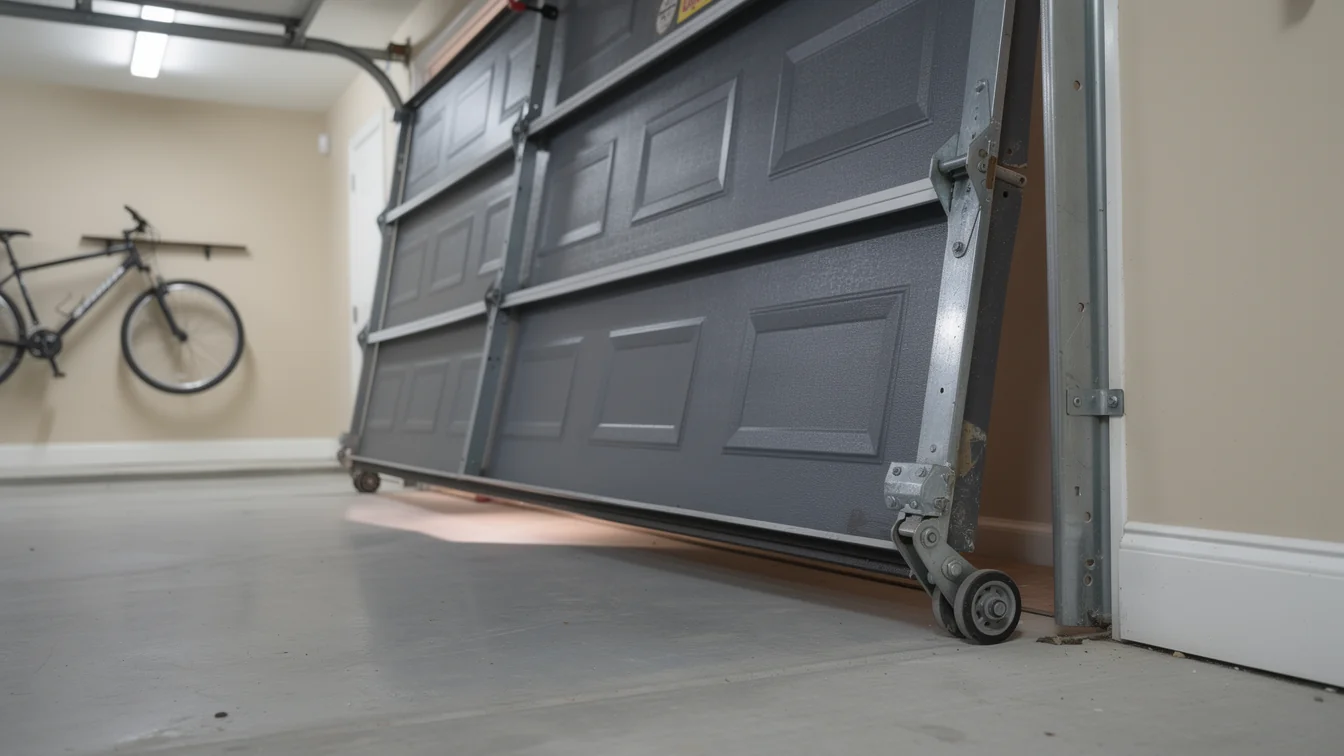
The first thing most owners do when a door starts rattling or binding is reach for the lubricant spray and hit every moving part they can see. That's not wrong exactly, but it treats the symptom, not the cause. On a door built during the 1975-2005 run that makes up most of the housing stock around Tarpon Springs, the track brackets are galvanized steel screwed into a wood jamb that's now 20 to 45 years old. Lubricant does nothing for a bracket that's worked loose or a jamb that's shifted a quarter inch out of square. We get a lot of calls where someone's sprayed silicone on a roller for three weeks straight and the door still jumps the track on the fourth run of the day. The actual fix is almost always re-anchoring the bracket and squaring the track, not lubricating a symptom that was never about friction in the first place. If your door is grinding or popping at the same spot every time it opens, that's a track alignment problem, and no amount of WD-40 is going to solve it.
What the Weather Here Does to It
Tarpon Springs sits in a mild temperate band, so we don't get the freeze-thaw cycles that crack concrete and snap brittle hardware up north. What we get instead is steady heat and humidity that swells wood door jambs and slowly stretches the screws holding track brackets into them. It's a slower kind of damage, and that's part of the problem - nobody notices it until the door is already riding crooked. On a house built in the 1980s or 90s, which describes most of this area, that jamb has had three or four decades of humidity cycling in and out of the wood grain. The screws back out a sixteenth of an inch at a time. Add a garage that sits unshaded through a Florida afternoon and the heat does the rest, flexing the track metal just enough that a roller catches the edge instead of riding flush inside it. None of this shows up as a dramatic failure. It shows up as a door that's 90% fine until the week it isn't.
The Situation
Across the service area there are roughly 83,123 households and about 46,314 owner-occupied houses, most of them built between 1975 and 2005 with a median year around 1984. That's a very specific window for garage doors, because it means the original track hardware on a lot of these houses is now old enough to have loosened at every mounting point at least once, but the doors themselves usually aren't old enough that replacement is the obvious call yet. We see this across the 17 named areas in this stretch of Pinellas and Pasco County - the symptom is the same whether the house is a mile from the water or ten miles inland. A door built in that era with steel track and a wood jamb is going to need its brackets re-torqued and the track re-squared at some point in its life. That's routine, not a sign the door is failing. What's not routine, and what we'll tell you honestly, is trying to fix a door that's been off track for weeks. By then the roller has usually worn a groove in the track edge, and at that point you're replacing the track section, not just tightening it.
What Changes With the Season
Because the climate here stays in the mild temperate range year-round, you don't get the hard seasonal swing that forces a spring recalibration the way colder regions do. What you do get is a slower, quieter drift - humidity swelling the jamb a little more in the wet months, heat flexing the track metal a little more in the dry ones. The practical result is that a door built in the 1980s or 90s rarely jumps off track in one dramatic event. It loosens gradually, binds a little more each month, and then one day a roller finally slips the lip of the track on a day that felt no different from the one before it. If you've noticed your door grinding at one spot in its travel, or the gap between the door and the track widening on one side, that's worth a look before it becomes a jumped roller and a stuck door. A quick bracket check costs a lot less than replacing a bent track section.
Frequently asked questions
Why does my garage door only jump the track in certain weather?
It's not really the weather itself - it's the cumulative effect. Houses in this area built in the 1975-2005 window have wood jambs that slowly swell and shrink with humidity, loosening the screws holding the track brackets. The door doesn't fail on one hot day; it fails after years of that slow movement finally letting a bracket shift enough for a roller to slip the track edge.
Can I fix a track that's slightly bent myself?
Sometimes, if it's a small bow and the track is still structurally sound - you can sometimes pry it back with a rubber mallet and a block of wood. But if the roller has already worn a groove into the bent section, bending it back won't stop it from catching again. At that point the track section needs replacing, and that's a job worth having someone look at in person.
How do I know if it's the track or the spring?
If the door grinds or catches at the same spot every time but still lifts with roughly the same effort, that points to the track. If the door feels heavy, drops suddenly, or won't stay open on its own, that's usually the spring. The two problems get confused a lot, and misdiagnosing one as the other wastes a service call.
Related garage door services in Tarpon Springs
More garage door guides
Book garage door service in Tarpon Springs
Call now or request a quote - tell us what the door is doing and where you are.