
Tarpon Springs, FL · Garage Door Service
What a Cold Snap Does to a Garage Door Spring in Tarpon Springs
Most Tarpon Springs homes date to the 1975-2005 build wave, and our mild climate means owners rarely think about spring failure until a cold snap hits.
- Repairs & new doors
- Springs & openers
- Serving 4 nearby communities
The Common Mistake
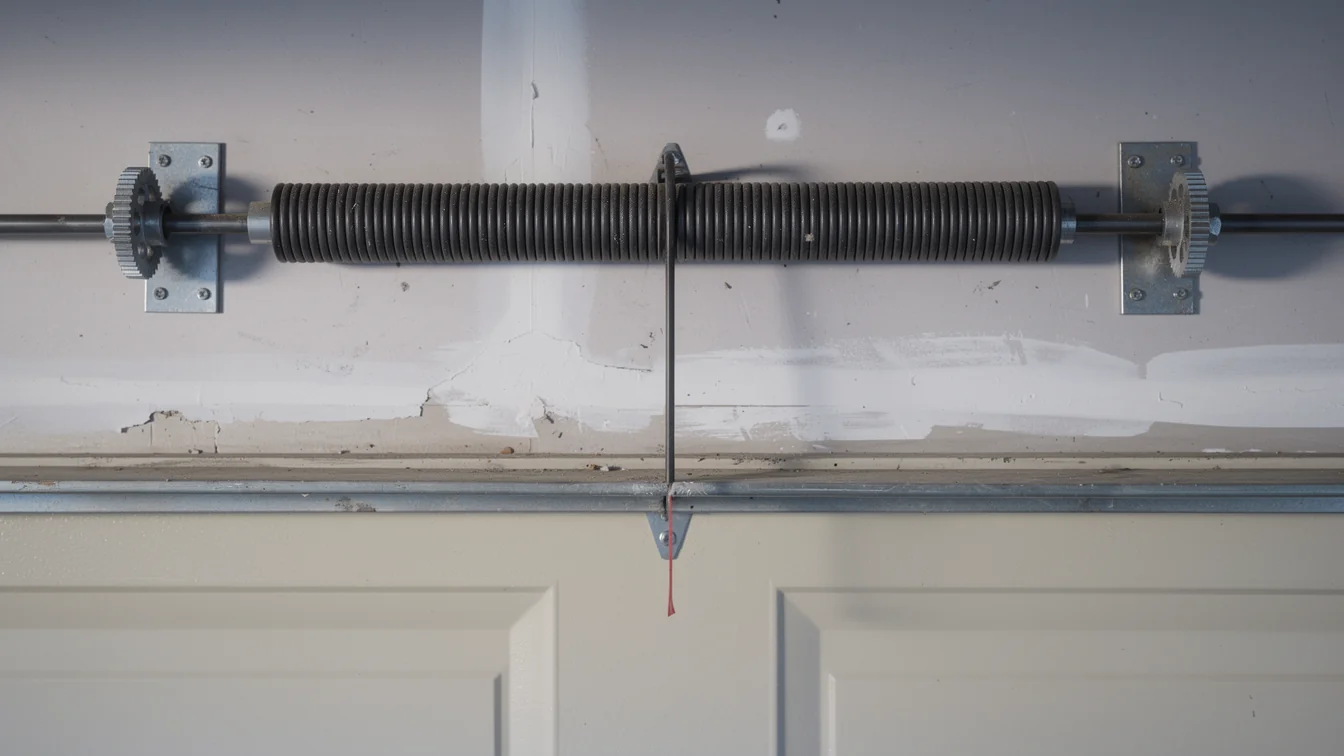
The mistake we see most in this area is owners assuming a torsion spring failure is a summer problem, something that happens when the garage bakes under a Florida sun. It's the opposite that catches people off guard. Most houses in and around Tarpon Springs went up between 1975 and 2005, with a lot of that stock dating to the mid-80s, and those original or first-replacement springs have had twenty to forty years of daily cycling in a climate that doesn't put much thermal stress on steel most of the year. Because the weather here stays mild, homeowners never develop the habit other regions have of checking the spring before the first cold morning. So when temperatures actually drop, the spring that's been fine for decades meets a condition it almost never sees, and it lets go without warning. The mistake isn't ignoring maintenance entirely - it's assuming a door that's worked fine through twenty mild winters will keep doing that forever. Steel fatigues on a cycle count, not a calendar, and a 1980s-era spring is closer to the end of that cycle count than most owners think, cold snap or not.
What the Weather Here Does to It
Tarpon Springs sits in a mild temperate band, which is good news for most of the house but creates a specific blind spot for garage door springs. Steel contracts when it gets cold, and a torsion spring that's wound tight loses a little flexibility right when a sudden temperature drop puts extra load on it - usually on the one or two mornings a year it actually matters here. In a region with real winters, the spring and the hardware around it are built and replaced with that stress cycle already priced in. Here, where most days sit well clear of freezing, a spring can go an entire service life without being tested by cold at all, until a cold snap arrives and finds a spring that was already near the end of its wind count from decades of warm-weather cycling. That's the exact combination - old spring, rare cold - that produces the loud bang in the driveway on a 40-degree morning when nothing else about the door has changed. It's not a dramatic climate event causing the failure. It's an ordinary cold snap meeting a spring that was due anyway, and the one with the other.
The Situation
Across the service area there are roughly 83,123 households and about 46,314 owner-occupied houses, a lot of them built during that same 1975-2005 run that defines Tarpon Springs and the seventeen communities around it, from Beacon Square five miles off to Indian Rocks Beach eighteen miles out. That means a large share of garage doors in this area are carrying original or near-original torsion springs rated for a build era, not a maintenance schedule anyone's kept up with. Median household income here runs close to $98,279, so when a spring does go, most owners aren't choosing between a repair and a bill they can't cover - they're choosing between fixing it right and getting talked into a full door replacement they don't need. A broken spring on an otherwise sound door from this era is almost always a spring job, not a door job. The honest limitation: if the door itself is original from the 1980s and the track or panels are already warped or rusted at the bottom, a new spring on an old door isn't always the better spend, and we'll tell you that on the call rather than after we've opened the garage.
What Changes With the Season
As the mild season gives way to the occasional cold stretch, the same door that's opened without complaint all year can suddenly feel heavier, slower, or louder in the first week of real cold. That's usually the spring telling you its wind tension has shifted with the temperature drop, not a sign the opener is failing. For a house built in that 1975-2005 window, this is the moment a spring near the end of its life tends to show it - a slight shudder, a door that doesn't sit flush at the bottom, a cable that looks loose. None of that is an emergency the rest of the year, but once the temperature drops it's worth a look before it becomes a broken spring and a door stuck shut on the one cold morning you needed it to open. We'd rather get the call for a noise than for a door that won't move.
Frequently asked questions
Why would my garage door spring break only when it gets cold, if it's worked fine for years?
Steel loses some flexibility as it cools, and a spring that's already near the end of its wind count from years of cycling has less margin to absorb that extra load. In a mild climate like ours, the spring rarely meets real cold, so the one cold snap that does arrive can be the trigger on a spring that was already due to fail.
Is my house old enough for this to be a concern?
If your home was built in the 1975-2005 range, which covers most of the housing in this area, your original or first-replacement spring has likely had decades of cycling. That's not an immediate problem on its own, but it means a cold-weather failure is more about age than about the cold itself.
Do I need a new door if the spring breaks?
Usually not. A broken torsion spring is a spring repair on most doors from this era, not a reason to replace the whole unit. The exception is if the track or panels show separate wear, like rust or warping at the bottom - that's a different conversation we'll have honestly before doing any work.
Related garage door services in Tarpon Springs
More garage door guides
Book garage door service in Tarpon Springs
Call now or request a quote - tell us what the door is doing and where you are.